Fatherhood in The Witcher 3: Wild Hunt
What does it mean to be a good father?

‘The Witcher 3: Wild Hunt’ is one of my favourite games of all time, having played through its 51 hour long main story, its two 10+ hour long DLC mainstories, and its countless hours worth of side content twice. I find the combat system well designed and the world jaw dropping, although being released in 2015 (and subsequently winning Game of the Year) the visuals still hold up in 2021. ‘The Witcher 3’ has one of, if not the best story I have ever played through in a videogame and through my two playthroughs of the main story, there is a clear theme which the game explores. Fatherhood.
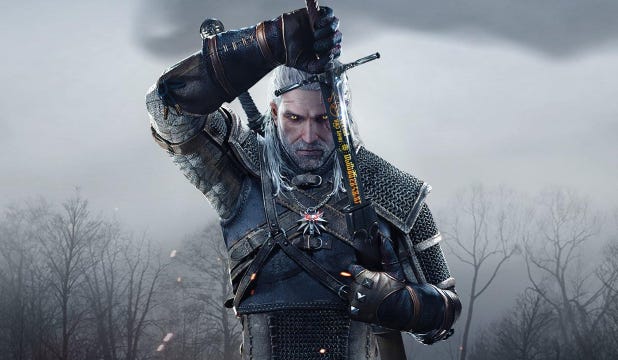
A quick overview of the story for those who have yet played CD Projekt Red’s masterpiece. The story follows Geralt of Rivia, perfessional monster slayer, as he searches for and then protects his surrogate daughter Ciri. The main focus of the story is on protecting Ciri, the chosen one, from those who wish to exploit her powers; however one of the most important aspects to the story is the relationship between Geralt and Ciri; a relationship which you, the player, will dictate.
Although the character of Geralt can considered by some an example the ‘male power fantasy’. He has the body of a greek god, he is battle hardened, possesses supernatural abilities due to his witcher mutations, and sleeps with attractive sorceresses. Those who do fail to see the other sadder aspects of his character, such as the racism he faces due to his mutations, or the fact that he has to risk his life daily just to get by, or the fact that he is trying to save his daughter from a band of spectors that are out to catch her. Geralt is merely a man trying to make a living and keep his daughter safe, a mutated man for sure, but still a man just trying to get by. Furthermore, the player has the option to make Geralt more strained and passive; avoiding the tropes of the stereotypical hyper-masculine hero.
Personally, I find the fact that he can be put through the stereotypical tropes of masculinity further elevates the idea of fatherhood in the game. By doing this the game is saying that being a father is as equally important to masculinity as being strong or tough. Due to the mechanics of the game, it can further be argued that the game actually elevates fatherhood above these other masculine traits. The decision on whether Geralt strong arms his way through the story has little significance on the final ending of the game, however the decisions based around his treatment of Ciri hold major significance on the final ending of the game.
Before I move on, here is your spoiler warning. If you wish to experience ‘The Witcher 3: Wild Hunt’ for yourslef, it is available on all major platforms. Many have called in the ‘Game of the Decade’, so I would highly recommend it.
Before I talk about Geralt and Ciri’s father-daughter relationship, it is best we start off with another father from ‘The Witcher 3’, the Bloody Baron. Phillip Strenger, commonly referred to as the Bloody Baron is one of the first characters Geralt meets on his quest to find Ciri, and acts as a reflection of Geralt. Both characters are searching for loved ones, Geralt is look for his daughter and the baron is in search of his lost wife and daughter. The Baron questline, a favourite among many fans, acts as a three-act-story all on its own since it mirrors Geralt’s quest in full.
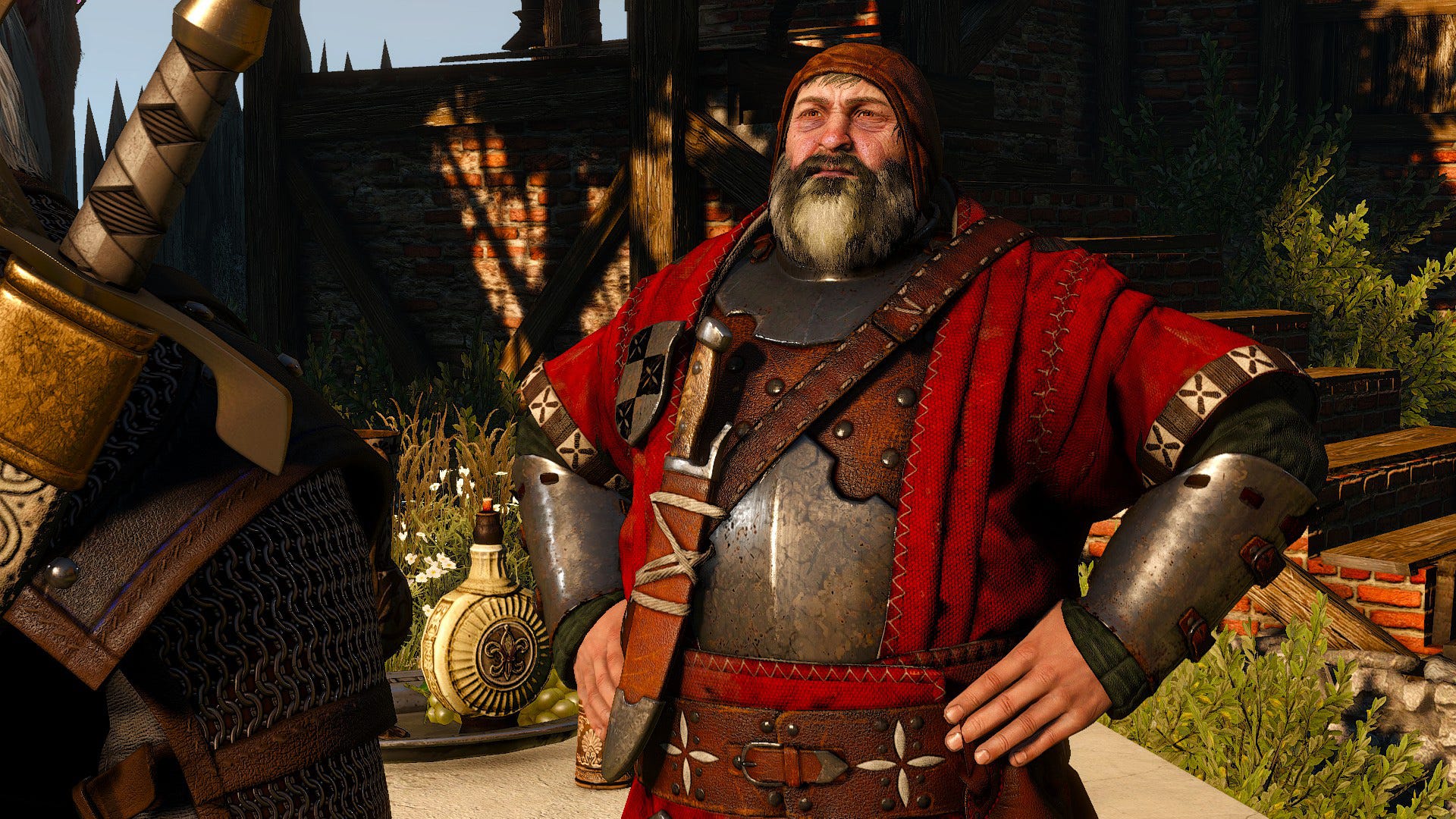
The Blood Baron is very much, what Bertant Lucat would call, an ‘anti-father’. These characters are not necessarily an antagonist, but rather what the game considers a bad father. While on the ‘Bloody Baron’ questline, Geralt learns that the baron is an alcoholic and the reason why his wife and daughter are gone is because they had run away after he had beaten his wife in a drunken rage. During the scene in which Geralt confronts the baron, he comes of as sad and pathetic however there is a hint of regret in his tone. Perhaps the father does care for his family, especially ‘the apple of [his] eye’, his daughter. This is further supported by the two possible endings of the storyline. In the first the baron takes his ill wife, after finding her, to a healer deep within the Blue Mountains, while in the other his wife dies, and in a state of unbarable grief the baron commits suicide by hanging himself. Through out the quest it is clear he now feels ‘remorse for his sins’, however even if the player gets the good ending the baron’s daughter still treats him with a degree of resentment. The Blood Baron acts as an early warning to Geralt to treat Ciri right, the baron represents how not to be a father. However even though the baron represents bad fathers, perhaps deep down within such fathers they still care for those they love, even if those they love do not love them back.
The idea of the Blood Baron being a reflection of Geralt is further supported when you look at the bad ending of the main story line. Ciri in her final act to save the world dies doing so, and Geralt in the same unbarable greif goes on a suicide mission to kill off the last remaining side-antagonist of the game. In the final shot of this ending we are treated to a shot of Geralt holding onto Ciri’s medallion as a swarm of ghouls swarm the hut he is in, the fact that there is no narrated ending for Geralt in this ending suggests that he died.
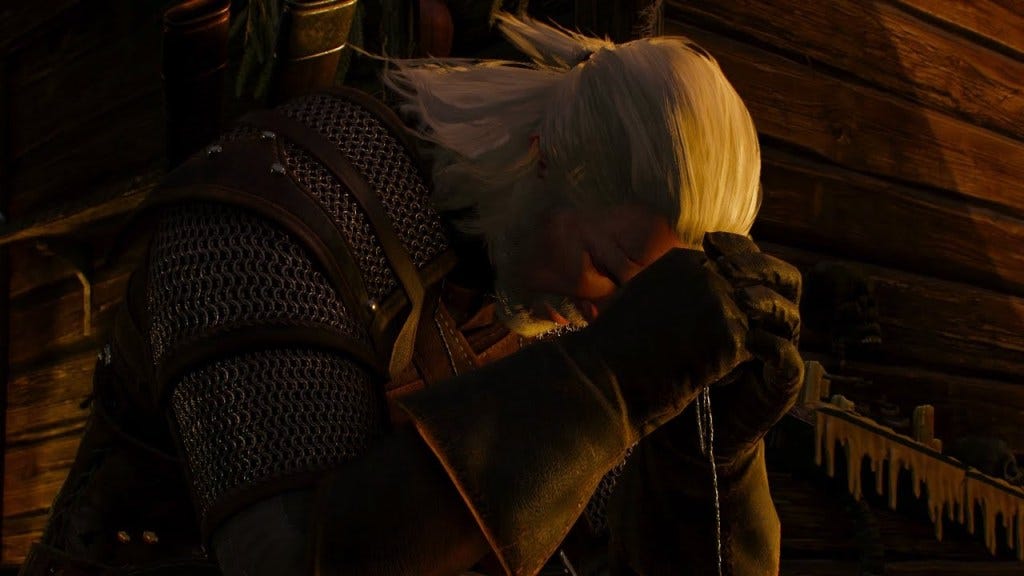
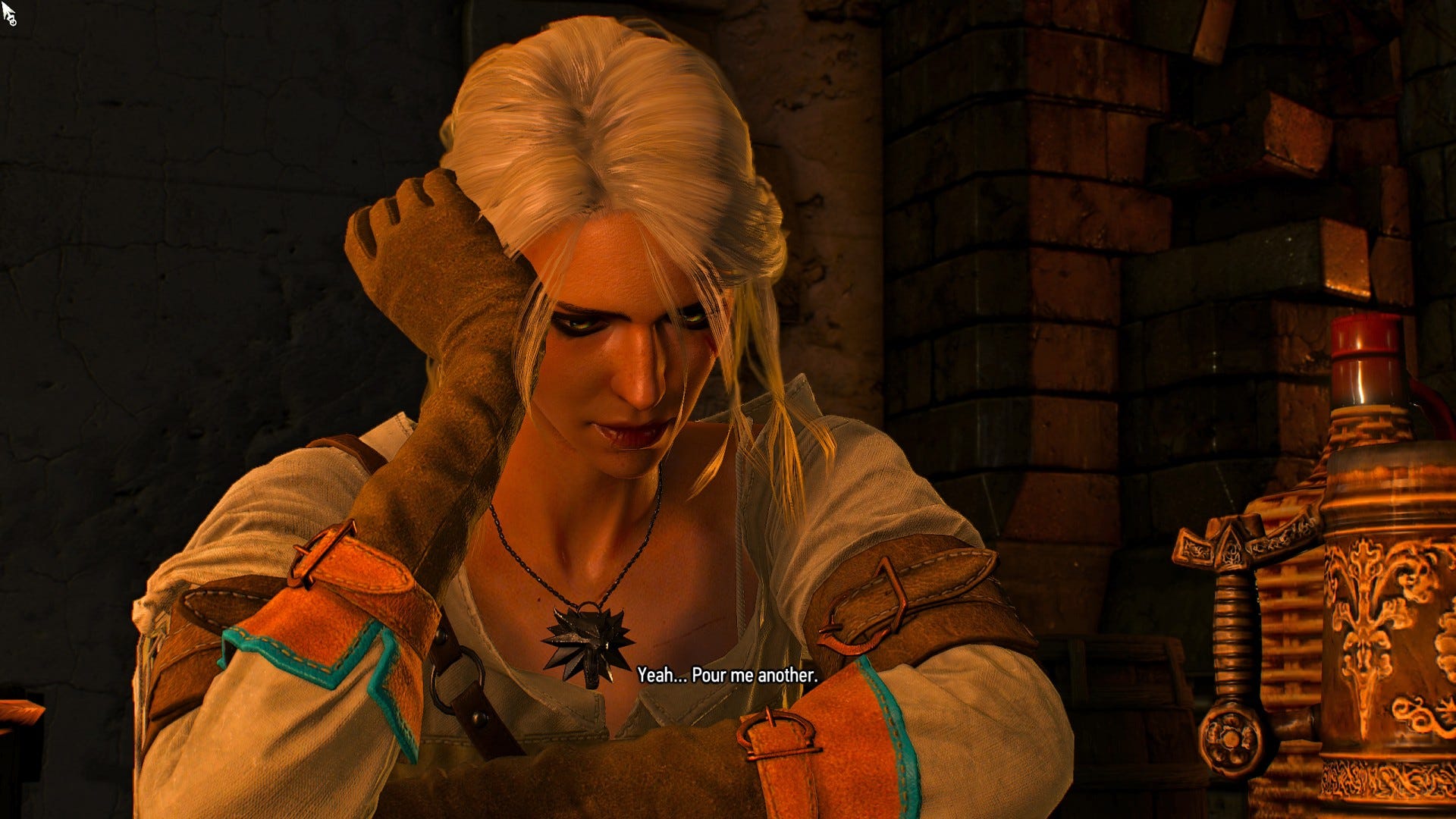
The ending of the game is determined by 5 crucial decisions, Geralt (in turn the player) has to make. The three decisions I found the most striking looking at the game in retrospect were, A) the decision at Kaer Morhen when Ciri get frustrated at being the chosen one, B) the decision at Avallac'h’s (Ciri’s friend) hideout after Ciri finds out he was using her, and C) the decision before meeting the Lodge. In the first case, if Geralt tells Ciri to ‘just relax’ (a thing many boys and girls are told to do by adults) in response to Ciri’s request for advice and dismisses Ciri’s feelings, the player is then treated to a scene where the two are drinking together. In this scene Ciri is clearly still frustrated at the situation and indifferently as Geralt to ‘pour her another’. The drinking within this sense also mirrors the Blood Barons drinking.
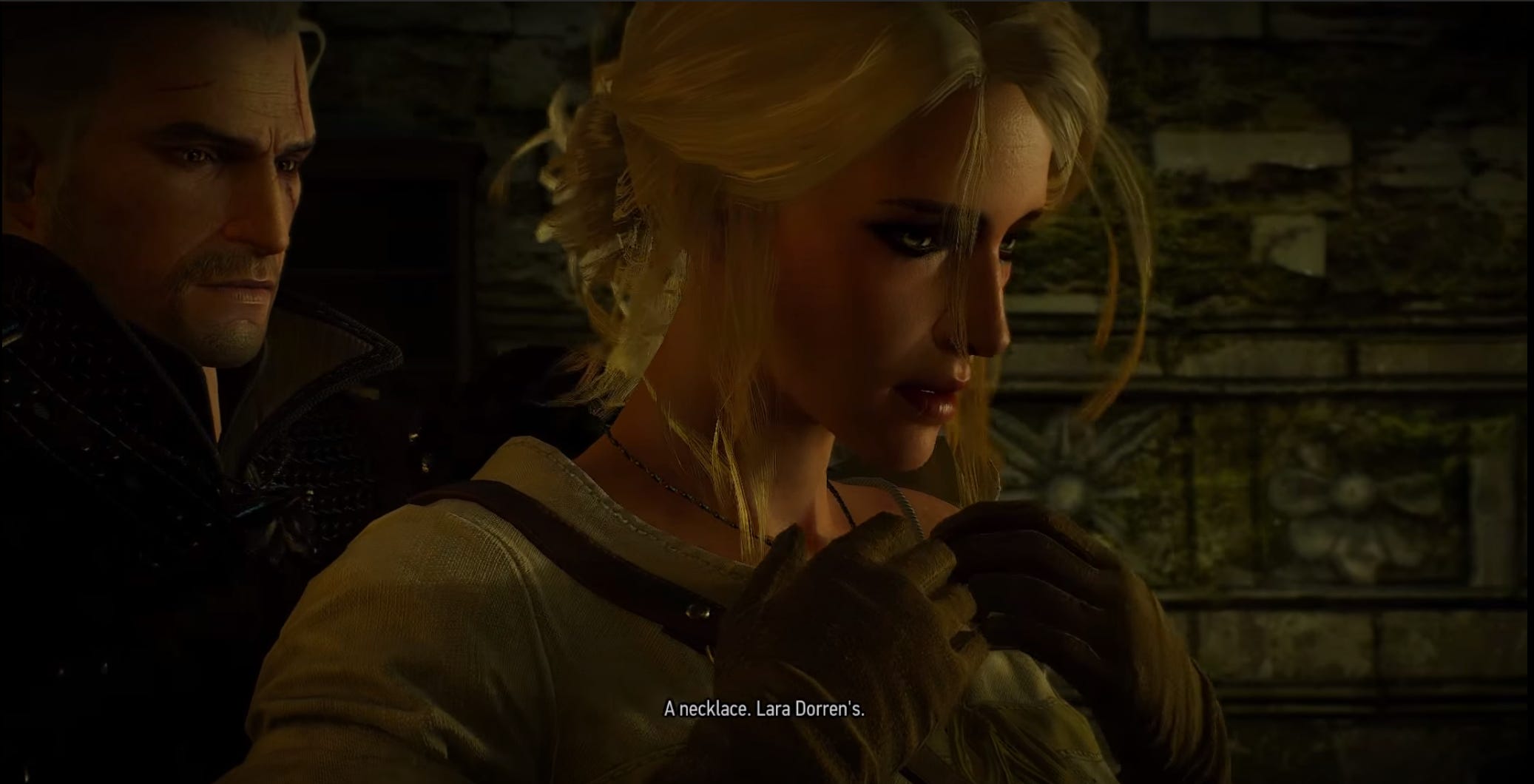
The second decision demonstrates the forcing of roles onto others, a common act many fathers do. During the second decision, when Geralt, Yennefer (a possible love interest), and Ciri sneak into Avallac'h’s hideout and learn the truth about him, Ciri becomes visibly frustrated. At this point Geralt can tell her to calm down or let her express her feelings, if the player chooses the former once again Geralt dismisses his daughter’s feelings. Even worse the player is treated to a shot where Geralt puts a necklace on Ciri, a necklace which represents the role of the chosen one, a role which Ciri does not wish to play. In putting on the necklace for her, Geralt is forcing this role upon her, like how many fathers may force a role onto their own children.
The third decision demonstrates the idea of overprotectiveness. Ciri is nervous about confronting the Lodge, a group of sorceresses hoping to use Ciri for themselves. At this point Geralt is faced with two choices, the first is to have confidence in her and tell her to go in the meeting room alone, the second is to go in with her and help her during the meeting. Although both may sound equally good, the latter is the one that will lead to the bad ending. In not having confidence in Ciri’s ability, Geralt diminishes Ciri’s own confidence and during the crucial moment when she has to save the world, she loses faith in herself and in turn dies. In making the decision of confidence or protection as a crucial one, the game is stating that although protection may be good, it often results in a less independant and less confident child. Many parents wish to protect their children which is good, however in doing so they often destroy the confidence of their own children and confidence is one of the best things to have in life.
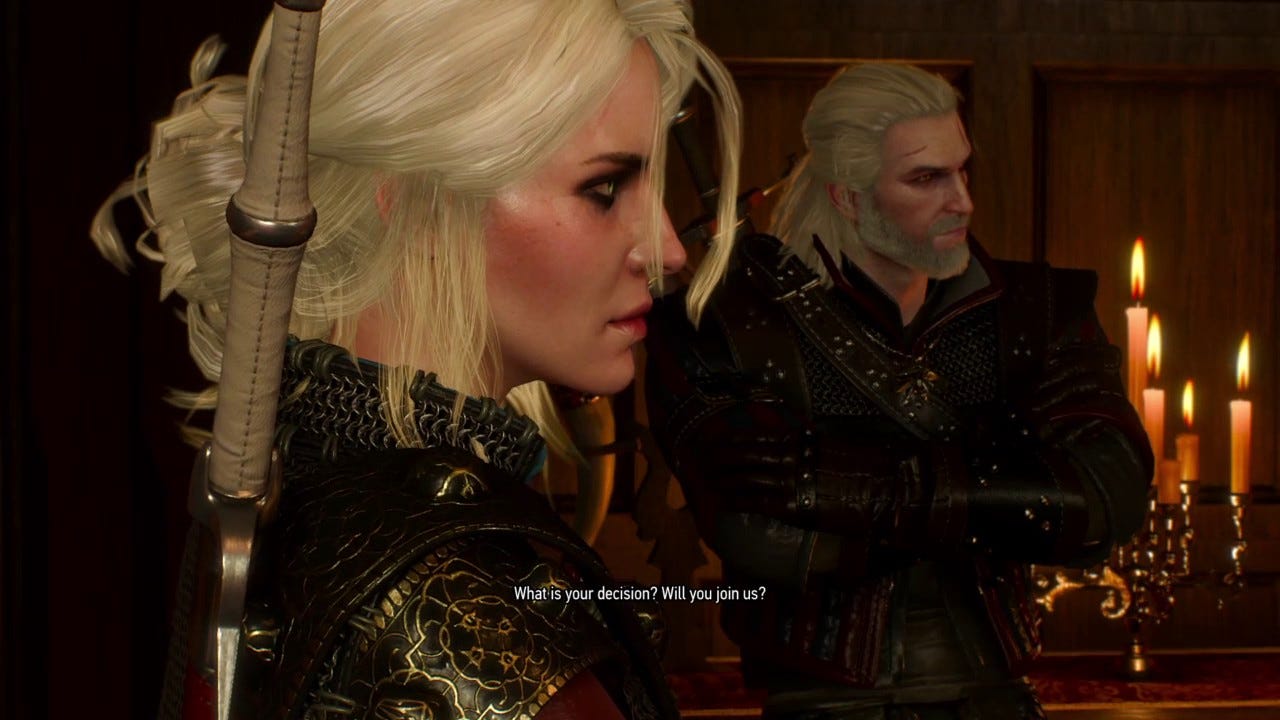
All these three decisions lead to the bad ending of the game where both father and daughter die. It is clear that such actions are a bad form of fatherhood. The first dismisses the emotions of the child, and in turn invalidates the feelings of the child resulting in a cold and indifferent person. The second forces an unwanted role onto the child, and not only forces her into an unhappy role but also takes away the hope of change from her as well. The third diminishes the child’s confidence, and this leads her into believing she is powerless and incapable without the help of her father. These three key decisions display the 3 cornerstones of fatherhood, acknowledgement of kin, freedom of kin, and confidence in kin.
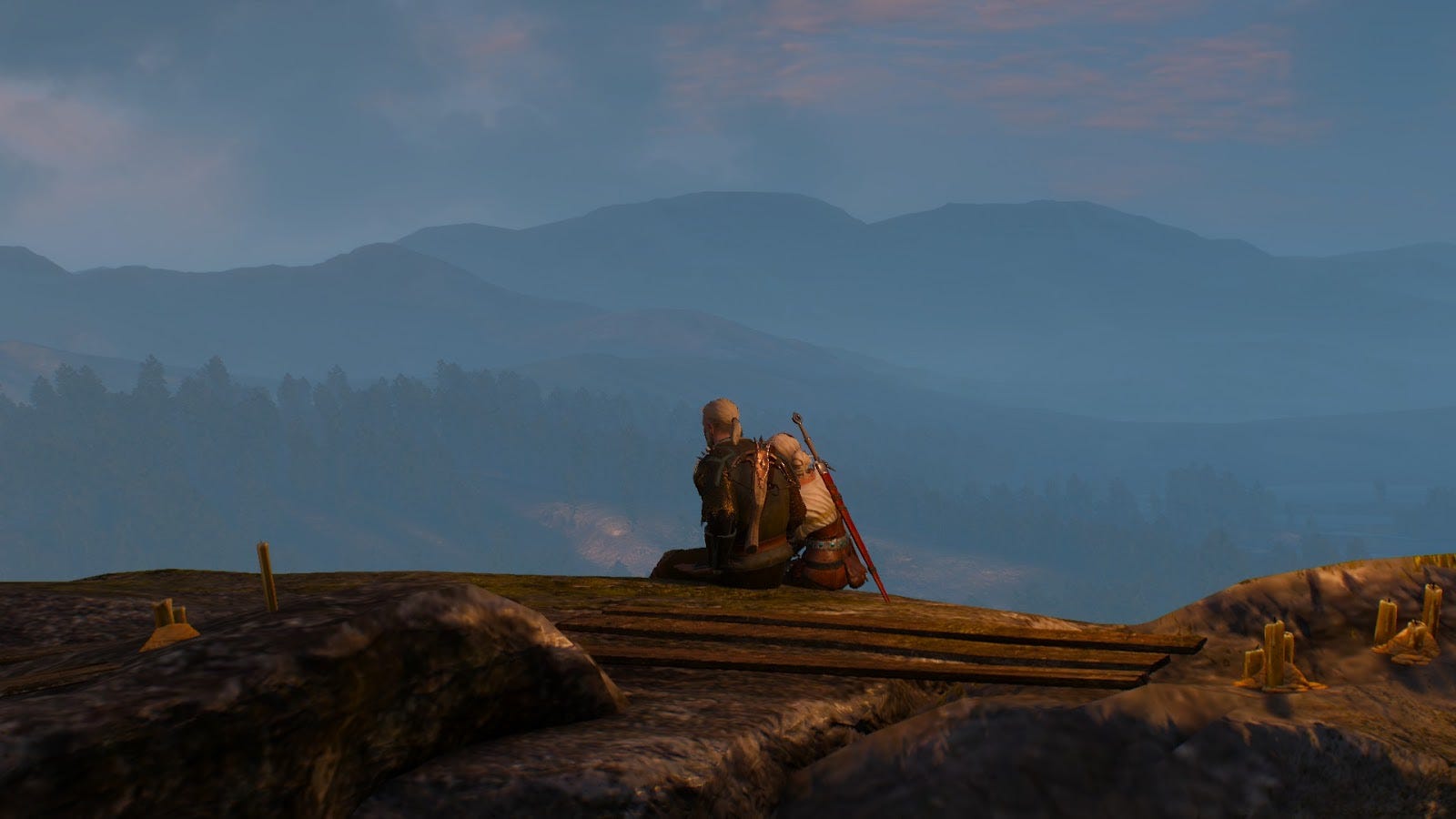
To receive the two good endings, Geralt must be a good father to Ciri. This means he must acknowledge Ciri’s feelings at Kaer Morhen resulting in a snowball fight, allow Ciri to express her feelings at Avallac'h’s hideout and wrecking the place with her, and lastly have confidence in Ciri and let her face the Lodge on her own. Making these decisions guarantees the player with the two possible endings. The first Ciri goes on to become the empress of Nilfgaard and in the second Ciri becomes a witcher like Geralt with him as her mentor. In the latter ending, Ciri happily becomes a witcher and avoids her forced destiny of becoming empress due to being the biological daughter of the Nilfgaardian emperor (voiced by Charles Dance!). This is the more popular ending, and my personal favourite due to the fact it shows the lasting bond between father and daughter. The fact that Geralt becomes Ciri’s mentor also fits with the theme of fatherhood and passing on one’s own knowledge to the next generation. An idea I really like.
The former ending however, the one where Ciri becomes empress also has the theme of fatherhood, it acts as a concluding point for 2 of the cornerstones of fatherhood, freedom of kin and confidence in kin. Although the fate of becoming empress is one forced upon Ciri due to her bloodline, it is a fate she willingly accepts. There is an important line said by Geralt during the bitter goodbye scene that encompasses the role of a good father. When Ciri ask if he would stop her and forbidden her from becoming empress, Geralt responds with
I travelled half the world to find you, but I never intended to force anything on you.
There are many other themes that can be found in ‘The Witcher 3: Wild Hunt’ and ‘The Witcher’ series (in videogame form and book form) ranging from racism, politics, and destiny. However the theme of Fatherhood is one that appears prominently. ‘The Witcher 3: Wild Hunt’ heavily explores this theme and displays their ideas on fatherhood through the decisions made through the game, the fact that it is also the player that makes these decisions makes the message hit even harder. To be a truly good father, one must set aside the stereotypical ideas of a man and allow their child to feel and express their emotions, one must not force anything upon their kin, and most importantly one must have the trust and confidence in their kin to allow them to grow freely.
CD Projekt Red’s 100+ hour epic of a game, is one beloved by me and many others around the world. Some may love it for its gameplay or its challenge, but I love it for the story. It has been written with great attention to detail and speaks volumes on a wide range of topics, but the most important theme is that of Fatherhood. This is only a commentary on the base game, there are other themes that can be found in the 2 DLCs but I will leave those two for you the reader to explore yourself. There are countless others who have talk about this theme, so if you wish to read more about it you can go look for yourself.
Hi there reader! I hope you enjoyed reading what I had to say about this amazing game, I truly believe videogames have the capacity to become a true literatry art form and this masterpiece of a game is really good example.
As always, if you like what I write about for fun you can drop your address here.